
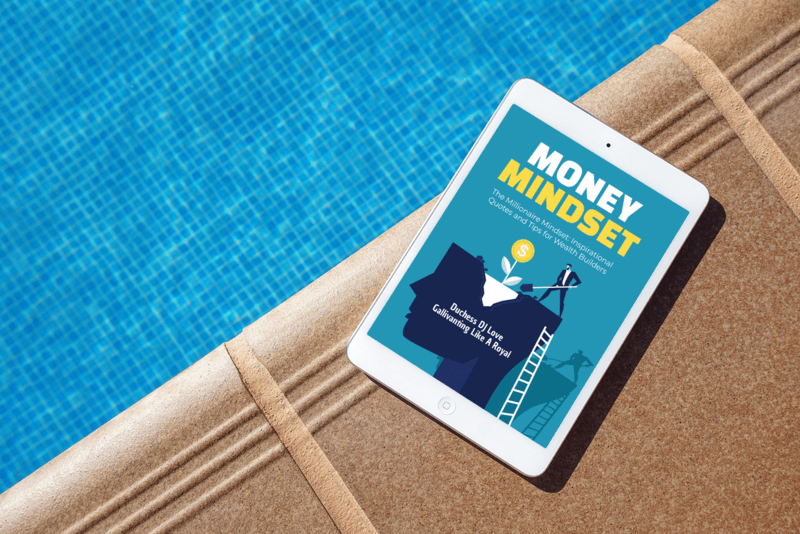
Passive income is a way of earning money without having to work actively for it. Passive income can come from various sources, like investments, businesses, or online ventures. Passive income can help you achieve financial freedom, diversify your income streams, and create more time for yourself. Develop the mindset for financial freedom.

Let’s make your money work for you by Duchess DJ Love: Author, Blogger, Caregiver, Frequent Traveler, Influencer, Digital Creator, Mentor, Photographer, and Podcaster.
To Make Your Money Work For You with Passive Income then learning how to earn passive income as a beginner is here for you. Some possible topics you can start today:
How to Sell Digital Products Online: You can create and sell digital products, such as ebooks, courses, software, or music, that customers can download or access online. You can use platforms like Shopify, Gumroad, or Teachable to host and sell your products. You can also promote your products through social media, email marketing, or affiliate marketing.
Digital products are intangible assets or media that can be distributed online without the need to source or manage physical inventory. These products are often delivered in downloadable or streamable formats, such as PDFs, MP3s, videos, software, or templates.
Selling digital products has many advantages, like saving time and money, scaling easily, having high profit margins, and offering flexibility. However, selling digital products also comes with some challenges, such as competing with free content, protecting your intellectual property, and creating a loyal customer base.

Types of Digital Products to Sell Online
There are many types of digital products you can sell online, depending on your skills, interests, and target audience. Here are some of the most popular categories of digital products:
Educational Digital Products: These are products that teach or inform your customers about a specific topic or skill. Examples include ebooks, online courses, webinars, podcasts, audiobooks, etc.
Digital Tools and Templates: These are products that help your customers do a specific task or achieve a specific goal. Examples include software, apps, plugins, themes, graphics, fonts, etc.
Licensed Digital Products: These products offer your customers with the right to use your intellectual property. This right is for a specific purpose or duration. Examples include stock photos, videos, music, sound effects, etc.
Memberships: These are products that provide your customers with ongoing access to exclusive content, benefits, or community. Examples include subscription boxes, newsletters, online communities, etc.
How to Validate Your Product Ideas
Before you invest your time and energy into creating your digital products, you need to make sure that there is a demand for them and that people are willing to pay for them. Here are some ways to validate your product ideas:
Conduct Market Research: You need to understand your target market, their needs, pain points, preferences, and behaviors. You can use tools like Google Trends, Keyword Planner, and AnswerThePublic to find out what people are searching for online and what questions they have. You can also use tools like BuzzSumo, Quora, and Reddit to find out what topics are popular and trending in your niche.
Identify a Problem to Solve: You need to find a specific problem that your target audience has and that your product can solve. You can use tools like SurveyMonkey, Typeform, and Google Forms to ask your potential customers about their challenges, frustrations, and goals. You can also use tools like Amazon, Udemy, and App Store to find out what products are already available in your niche and what gaps or opportunities exist.
Niche Down and Define a Target Market: You need to narrow down your product idea and focus on a specific segment of your market. You can use tools like Facebook Audience Network, SimilarWeb, and Alexa to find out who your competitors are and who their customers are. You can also use tools like Facebook Insights, Google Analytics, and Hotjar to find out who your website visitors are and what they do on your site.
Create a Minimum Viable Product (MVP): You need to create a simplified version of your product that has the core features and benefits that your customers need. You can use tools like WordPress, Shopify, and Gumroad to create a landing page, an online store, or a checkout page for your product. You can also use tools like Canva, Loom, and Audacity to create a mockup, a video, or an audio of your product.
Get Feedback and Test Your Product: You need to get feedback from your potential customers and test your product with them. You can use tools like Mailchimp, ConvertKit, and MailerLite to build an email list and send your product to your subscribers. You can also use tools like Google Ads, Facebook Ads, and Instagram Ads to drive traffic to your product and measure the conversion rate. You can also use tools like UserTesting, UsabilityHub, and FeedbackFish to collect feedback and suggestions from your users.
How to Create an Online Store
Once you have validated your product idea and created your MVP, you need to create an online store where you can sell your digital products. Here are some steps to create an online store:
Choose a Platform: You need to choose a platform that suits your needs and budget. You can use platforms like Shopify, WooCommerce, or BigCommerce to create a fully functional online store with various features and integrations. You can also use platforms like Sellfy, Podia, or Teachable to create a simple and easy-to-use online store for specific types of digital products.
Choose a Domain Name: You need to choose a domain name that represents your brand and product. You can use tools like Namecheap, GoDaddy, or Domain.com to find and register a domain name for your online store.
Choose a Theme: You need to choose a theme that matches your brand and product. You can use themes that are provided by your platform or you can use themes that are created by third-party developers. You can also customize your theme to make it more unique and appealing.
Add Your Products: You need to add your products to your online store and give relevant information and details. You need to include a product name, description, price, image, and file. You also need to choose a delivery method, such as download, email, or streaming. You also need to set up your payment methods, like PayPal, Stripe, or Apple Pay.
Add Your Policies: You need to add your policies to your online store and inform your customers about your terms and conditions. You need to include a privacy policy, a refund policy, a disclaimer, and a license agreement. You also need to follow any legal or regulatory requirements in your country or region.
How to Promote Your Products on Social Media
After you have created your online store and added your products, you need to promote your products on social media and attract more customers. Here are some ways to promote your products on social media:
Create a Social Media Strategy: You need to create a social media strategy that defines your goals, audience, platforms, content, and metrics. You need to choose the platforms that are relevant to your niche and audience, such as Facebook, Instagram, YouTube, Twitter, etc. You also need to create content that is valuable, engaging, and shareable, like blog posts, videos, podcasts, infographics, etc. You also need to measure your results and optimize your strategy, such as followers, likes, comments, shares, clicks, etc.
Build a Social Media Presence: You need to build a social media presence that showcases your brand and product. You need to create a profile, a bio, and a logo for each platform. You also need to post regularly, interact with your audience, and join relevant groups and communities. You also need to use hashtags, keywords, and tags to increase your visibility and reach.
Run a Social Media Campaign: You need to run a social media campaign that generates interest and excitement for your product. You can use different types of campaigns, such as contests, giveaways, challenges, quizzes, etc. You also need to create a landing page, a lead magnet, and an email sequence for your campaign. You also need to use tools like Gleam, Rafflecopter, or KingSumo to manage your campaign and collect entries.
Use Social Media Ads: You need to use social media ads to boost your exposure and sales. You can use different types of ads, like image, video, carousel, story, etc. You also need to create a compelling copy, a clear call to action, and a targeted audience for your ads. You also need to use tools like Facebook Pixel, Google Analytics, or Shopify Analytics to track your ads and measure your return on investment.
Start Selling Digital Products Online Today
Selling digital products online is a great way to turn your passion, skills, or knowledge into a profitable business. You can create and sell digital products that provide value, solve problems, and satisfy needs for your customers. You can also enjoy the benefits of selling digital products, such as saving time and money, scaling easily, having high profit margins, and offering flexibility.
However, selling digital products online also requires a lot of planning, research, validation, creation, and promotion. You need to follow the steps and use the tools that we have discussed in this blog post to create, market, and sell digital products online successfully.
If you’re ready to start selling digital products online, you can use Shopify to create your own online store in minutes. Shopify is the leading ecommerce platform that allows you to sell any type of digital product online. You can also use Shopify to manage your inventory, orders, payments, shipping, taxes, and more. You can also use Shopify to integrate with various apps and tools that can help you create, market, and sell digital products online.
You can start your free 14-day trial of Shopify today and launch your online business with Shopify. No credit card required. No risk. No hassle.
Start Selling Digital Products Online with Shopify → Click Here1 Want to Learn More? If you want to learn more about how to sell digital products online, you can check out these resources:
- How to Sell Digital Products Online (+25 Profitable Ideas)
- What Are Digital Products? Sell These 10 Products Online (2024)n this blog post, we’ll explore the types of digital products you can create, how to validate your product ideas, how to create an online store, and how to promote your products on social media.

How to Start a Blog and Monetize It: You can start a blog on a topic you are passionate about and generate income from it. You can use platforms like WordPress, Squarespace, or Wix to create and host your blog. You can monetize your blog by displaying ads, selling sponsored posts, offering memberships, or creating your own products or services.
There are many ways to start a blog and make money from it, but here are some general steps you can follow:
Choose a profitable niche that you are passionate about and have some skill in. This will help you attract and retain your target audience, as well as stand out from the competition. Some examples of popular and profitable niches are health and fitness, personal finance, travel, food, and fashion.
Set up your blog using a reliable platform like WordPress, Wix, or Squarespace. You will need to choose a domain name, a hosting service, a theme, and some plugins to customize your blog and enhance its functionality. You can also use a free blogging platform like Medium or Blogger, but you will have less control and flexibility over your blog.
Create high-quality and engaging content for your blog. You should write about topics that solve your audience’s problems, answer their questions, or entertain them. You should also use SEO techniques to optimize your content for search engines and drive organic traffic to your blog. Some types of content you can create are blog posts, ebooks, online courses, podcasts, videos, and infographics.
Promote your blog and grow your audience. You should use social media platforms like Facebook, Twitter, Instagram, Pinterest, and YouTube to share your content and interact with your followers. You should also use email marketing to build a loyal and responsive email list. You can also leverage guest posting, influencer marketing, online forums, and paid advertising to reach more people and increase your blog’s visibility.
Monetize your blog using various methods. You can make money from your blog by displaying ads, joining affiliate programs, selling your own products or services, offering paid subscriptions or memberships, hosting sponsored posts or reviews, accepting donations, or launching a virtual summit. You should choose the monetization methods that suit your niche, your audience, and your goals. You should also track and analyze your blog’s performance and revenue using tools like Google Analytics, Google AdSense, and Google Search Console.
These are the basic steps to start a blog and monetize it. Of course, there are more details and nuances involved in each step, and you will need to experiment and learn from your experience. If you want to learn more, you can check out some of these resources:

How to Invest in Dividend Stocks: You can invest in stocks that pay dividends, which are regular payments made by companies to their shareholders. You can use platforms like Robinhood, Webull, or E*TRADE to buy and sell stocks. You can also use tools like Dividend.com, Seeking Alpha, or Simply Safe Dividends to research and analyze dividend stocks.
Dividend stocks are stocks that pay regular cash payments to shareholders, usually every quarter. They can be a great way to generate passive income and grow your wealth over time. However, not all dividend stocks are created equal, and you need to know how to choose the best ones for your portfolio. Here are some tips on how to invest in dividend stocks in 2023:
Look for companies with a history of stable and growing dividends. A consistent dividend track record shows that the company is profitable, reliable, and committed to rewarding its shareholders. You can use stock screeners to filter for stocks that have increased their dividends for at least 10 consecutive years, or belong to the Dividend Aristocrats or Dividend Kings lists1.
Check the dividend yield and payout ratio. The dividend yield is the annual dividend per share divided by the stock price, and it tells you how much income you can expect from a dividend stock. The payout ratio is the percentage of earnings that the company pays out as dividends, and it tells you how sustainable the dividend is.
A high dividend yield can be attractive, but it can also indicate that the stock price is depressed or the dividend is in danger of being cut. A low payout ratio means that the company has enough earnings to cover the dividend and reinvest in its growth. A good rule of thumb is to look for stocks with a dividend yield between 2% and 6%, and a payout ratio below 60%2.
Evaluate the company’s financial health and growth prospects. Dividend stocks are not just about income, they are also about capital appreciation. You want to invest in companies that have strong balance sheets, positive cash flows, competitive advantages, and growth opportunities.
You can use financial ratios, such as debt-to-equity, return on equity, free cash flow, and earnings per share, to assess the company’s financial performance and stability. You can also look at the company’s industry, products, services, customers, and competitors, to see if it has a clear vision and strategy for the future3.
Diversification
Diversify your dividend portfolio. As with any investment, you don’t want to put all your eggs in one basket. You want to diversify your dividend portfolio across different sectors, industries, geographies, and market capitalizations, to reduce your risk and exposure to any single company or market.
You can also diversify by investing in dividend funds, such as exchange-traded funds (ETFs) or mutual funds, that hold a basket of dividend stocks. This can save you time and money, as you don’t have to research and buy individual stocks, and you can benefit from the fund’s professional management and low fees4.
Reinvest your dividends. One of the best ways to maximize your returns from dividend stocks is to reinvest your dividends, either by buying more shares of the same stock or by diversifying into other dividend stocks.
This way, you can take advantage of the power of compounding, as your dividends generate more dividends, and your portfolio grows faster over time. You can use a dividend reinvestment plan (DRIP), which is offered by many companies and brokers, to automatically reinvest your dividends without paying any commissions or fees5.
Dividend investing can be a rewarding and profitable strategy, if you know how to do it right. By following these tips, you can build a diversified portfolio of high-quality dividend stocks that can provide you with steady income and long-term growth. Happy investing! 😊

How to Buy and Rent Out Properties: A Guide for Beginners
How to Buy and Rent Out Properties: You can buy properties and rent them out to tenants, either short-term or long-term. You can use platforms like Airbnb, VRBO, or Booking.com to list and manage your properties. You can also use tools like Zillow, Trulia, or Realtor.com to find and compare properties.
Are you looking for a way to generate passive income and build wealth through real estate? Buying and renting out properties can be a great strategy, but it requires careful planning and research. In this blog, I will share with you some of the steps you need to take to buy your first rental property and become a successful landlord.
Step 1: Decide on your investment goals and strategy
Before you start looking for properties, you need to have a clear idea of why you want to invest in real estate and what kind of returns you expect. Do you want to buy a house to rent out for the long term, or do you want to flip it for a quick profit? Do you want to invest in your local market, or do you want to explore other areas with higher potential? Do you want to manage the property yourself, or do you want to hire a professional property manager?
Your answers to these questions will help you narrow down your options and choose the best investment strategy for your situation. For example, if you want to buy a house to rent out on Airbnb, you need to look for properties in high-demand locations with lenient regulations and attractive amenities. If you want to buy a house to rent out traditionally, you need to look for properties with low maintenance costs, stable cash flow, and good appreciation prospects.
Step 2: Do your market research and analysis
Once you have decided on your investment strategy, you need to do your homework and research the market you want to invest in. You need to understand the supply and demand dynamics, the rental rates, the vacancy rates, the tenant profile, the economic and demographic trends, and the legal and tax implications of owning a rental property in that market.
You also need to analyze the potential profitability and risk of each property you are interested in. You can use tools like Mashvisor or Roofstock to find and compare properties based on various metrics, such as cap rate, cash on cash return, occupancy rate, and cash flow. You can also use tools like BiggerPockets or Clever Girl Finance to learn from other investors and get tips and advice on how to buy and rent out properties.
Step 3: Secure your financing and budget
Buying a rental property is a major financial decision, and you need to have a solid plan for how you will pay for it. Unless you have enough cash to buy the property outright, you will need to get a mortgage loan from a bank or a lender. However, getting a loan for a rental property is different from getting a loan for your primary residence. You will need to have a higher credit score, a larger down payment, and a lower debt-to-income ratio. You will also have to pay a higher interest rate and closing costs.
You also need to have a realistic budget for your rental property expenses. Besides the mortgage payment, you will have to pay for property taxes, insurance, maintenance, repairs, utilities, advertising, and property management fees. You should also have an emergency fund to cover any unexpected costs or vacancies. A good rule of thumb is to set aside at least 10% of your rental income for these expenses.
Step 4: Find and screen your tenants
One of the most important aspects of buying and renting out properties is finding and screening your tenants. Your tenants are the ones who will pay your rent and take care of your property, so you want to make sure they are reliable, responsible, and respectful. You also want to avoid any legal issues or disputes that may arise from renting out your property.
To find good tenants, you need to advertise your property on various platforms, such as online listings, social media, or word-of-mouth. You also need to show your property to prospective tenants and answer their questions. To screen your tenants, you need to ask them to fill out a rental application, check their credit history, income, and references, and conduct a background check. You also need to comply with the fair housing laws and avoid any discrimination based on race, color, religion, sex, national origin, disability, or familial status.
Step 5: Sign a lease agreement and collect rent
After you have found and screened your tenants, you need to sign a lease agreement with them and collect the rent. A lease agreement is a legal document that outlines the terms and conditions of the rental arrangement, such as the rent amount, the security deposit, the lease duration, the rules and regulations, the responsibilities and rights of both parties, and the consequences of breaking the lease. You should consult a lawyer or use a standard lease template to draft your lease agreement and make sure it is clear and enforceable.
To collect the rent, you need to have a system that is convenient and secure for both you and your tenants. You can use online payment platforms, such as PayPal, Venmo, or Zelle, to receive the rent electronically, or you can use traditional methods, such as checks, money orders, or cash. You should also have a policy for late payments, fees, and penalties, and communicate it to your tenants in advance.
Buying and renting out properties can be a rewarding and lucrative way to invest in real estate, but it also comes with challenges and risks. You need to be prepared, educated, and diligent to succeed in this business. By following the steps outlined in this blog, you can start your journey as a real estate investor and achieve your financial goals.
Learn more1mashvisor.com2learn.roofstock.com
How to Start a YouTube Channel or Podcast: You can create and share videos or audio content on a topic you are knowledgeable or passionate about. You can use platforms like YouTube, Spotify, or Anchor to host and distribute your content. You can monetize your channel or podcast by displaying ads, getting sponsorships, or receiving donations.
These are just some of the passive income ideas you can try to make your money work for you. You can find more information and examples on these topics by searching the web. You can also use your own creativity and experience to come up with your own unique ideas. Remember, passive income is not a get-rich-quick scheme, but a long-term strategy that requires patience, persistence, and passion.
Let’s Make Our Money Work For Us. Let me know what you think about beginning your passive income journey. Share your stories and inspiration in the comments.




Leave a Reply